

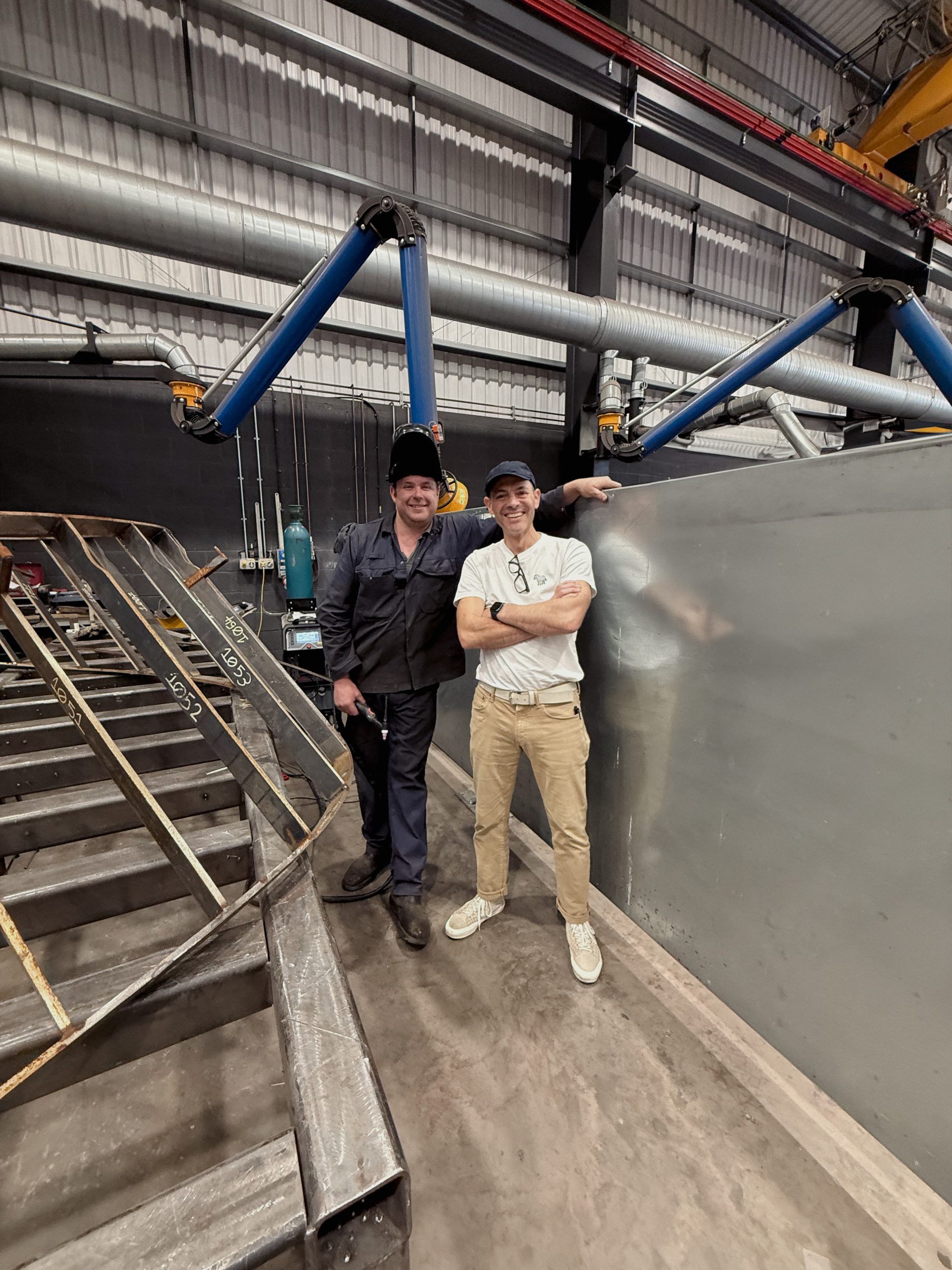
Workshop visit – 001
As if one workshop of my own weren’t enough, I often find myself stepping through the dust and noise of others — wandering factory floors, poring over details with those who, like me, speak the language of making. In truth, a ten-minute conversation in a workshop is worth a thousand emails. There’s an old saying that rings true: It’s good to put a face to a name. I’d go further — it’s better to hear the whirr of the machines, smell the steel, and see the sparks fly.
So, in this first chapter of a new workshop series, I headed to the industrial heart of Birmingham to visit D. Wilson Architectural Metalworkers, a team behind some of the most extraordinary feats of metal engineering. Hidden behind unassuming doors, their work is colossal in both scale and ingenuity — the kind of place where a Boeing 737 might feel at home.
Inside, the air buzzes with purpose. Massive fishbone-like frames of steel are rolled, welded, and assembled into skeletal giants. These aren’t just components — they’re the limbs of a larger architectural creature, destined to become something iconic. It felt like walking through a quieter, steel-bound version of Ted Hughes’ Iron Man — less Marvel blockbuster, more poetic monument.
Among the smoke and steel, I watched a cheerful forklift driver weave between workstations, balancing a load that defied logic. He gave a nod, knowing full well there’d be no hearing each other over the Sabbath-like roar of machinery. Above, a yellow gantry crane floated across the ceiling like a mechanical sunbeam, orchestrating the ballet of production below.
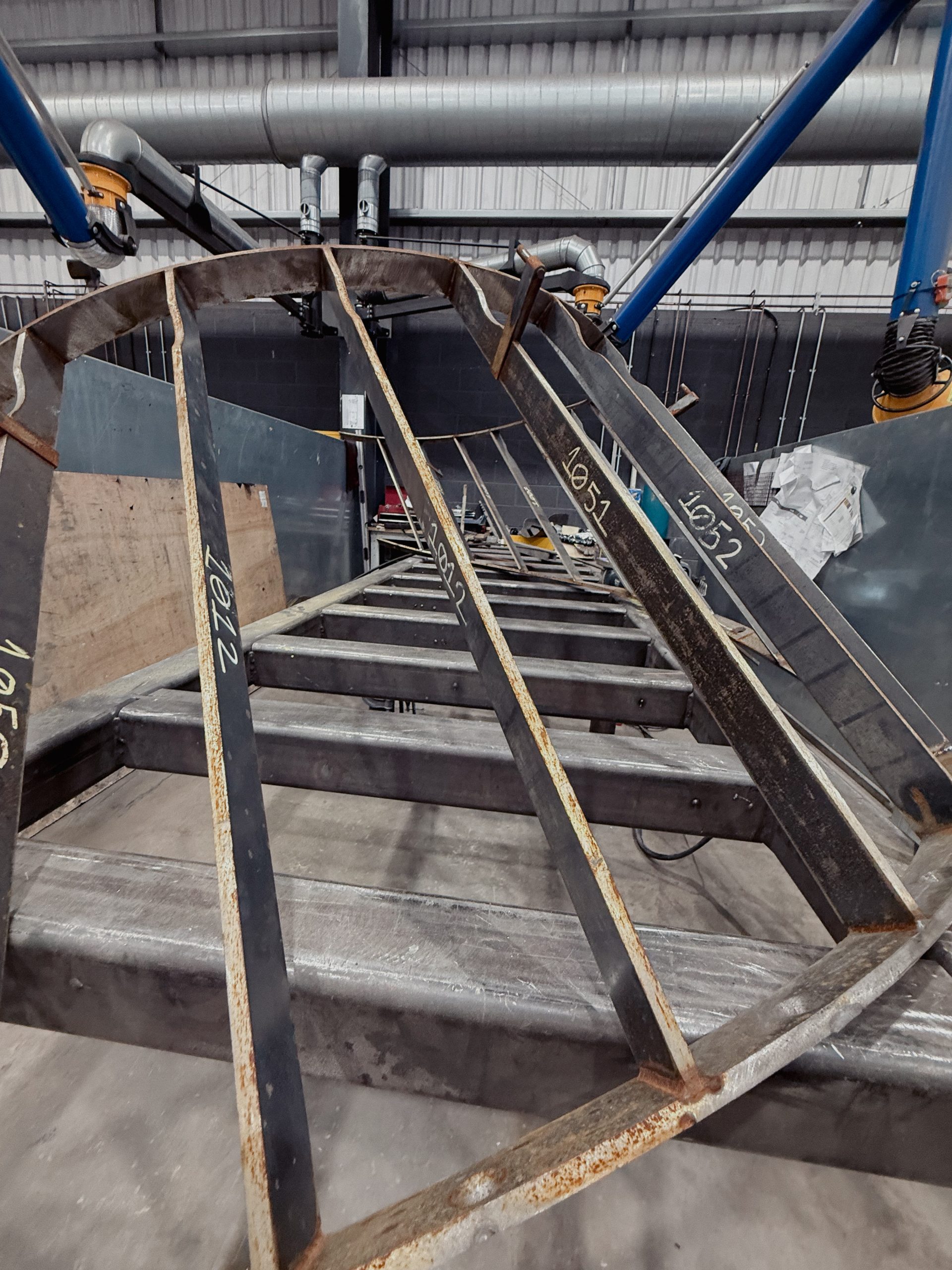
But I was here on a mission: to collect timber samples for a staircase bound for a landmark HQ project in London. The materials themselves might seem familiar — timber, stone, metal — but here, the detail does the heavy lifting. The staircase’s bold metal structure, for all its presence, will be cloaked beneath honed sandstone, a sculpted skin hiding the engineering muscle.
And nestled into that stone — small, precise notches: clues to the craftsmanship at work. From these, hand-shaped rail brackets will emerge, supporting a sweeping timber handrail. That rail, in turn, will be wrapped in the client’s signature black leather — tactile, timeless, tailored.
It’s always a privilege to be part of a build where the hidden work is as beautiful as what’s eventually seen. Behind every project is a network of craftspeople, fabricators, and thinkers who care deeply about what they make — even the parts that are never seen by the public eye.
This visit was a reminder that making isn’t just about end results — it’s about process, collaboration, and, sometimes, standing in the middle of a factory floor just to feel the hum of something extraordinary being built.
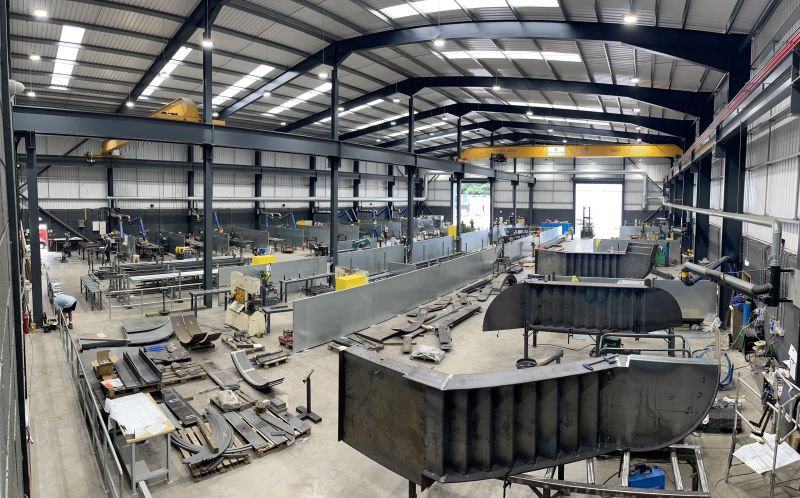
Image courtesy of D . Wilson